
Fiber optic links connect switches, media converters, distributed control systems, and remote process equipment. Proper link design using optical power budgets is necessary, as explained in our prior article about optical budgets and split ratios in fiber network monitoring. Still, calculations alone do not guarantee long-term reliability.
What matters most in operational environments is verification and visibility:
- Was the link installed correctly?
- Is the optical power margin sufficient in real conditions?
- Are optics, connectors, and cables clean and performing as expected?
- How do we detect degradation before it becomes an outage?
This article bridges theory and practice. You will learn how to validate fiber performance in the field using optical measurements, inspection tools, and fiber TAPs for continuous monitoring.
Why budget calculations need validation
Optical power budgets tell you how much loss a link can tolerate before performance degrades. Calculations account for attenuation, connectors, splices, and safety margins. That is a necessary first step, and if you haven’t read it yet, start with our prior article:
Optical Budget and Split Ratios in Fiber Network Monitoring
However, real installations rarely behave as calculations predict. Factors such as:
- Contaminated or scratched connector end faces
- Undocumented patches and adapter panels
- Microbends caused by tight conduit or cable trays
- Temperature extremes affecting attenuation
- Aging or mismatched optics from different vendors
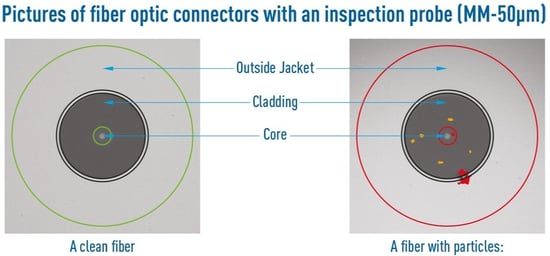
Step 1: Inspect every connector before commissioning
Even with a positive calculated power budget, dirty or damaged connectors are among the most common causes of unexpected power loss. So always inspect!
Best practice:
Use a fiber inspection microscope to inspect and document every connector end face, including patch cords and adapter panels. Clean only when contamination is confirmed, and re-inspect until the end face meets industry standards.
This simple routine prevents unpredictable losses that calculations and budgets cannot anticipate.
Step 2: Clean dirty connectors
We have written an article about this: Best Practices in Cleaning Fiber Optics.
Step 3: Measure loss after installation
A power budget that looks good on paper may underperform after installation. If you have appropriate test equipment (optical power meters or fiber certifiers), measure:
- Launch power at the source
- Receive power at the far end
- Total link loss
- Connector and splice-specific loss
This measurement complements your budget calculation and provides real-world performance data. When measurements deviate significantly from calculated expectations, investigate:
- Excessive bends
- Damaged or kinked cables
- Mismatched fiber types
Document measured values and compare them to your design assumptions. Acceptable links should maintain a margin above the worst-case budget used in planning.
Step 4: Use passive fiber TAPs for ongoing visibility
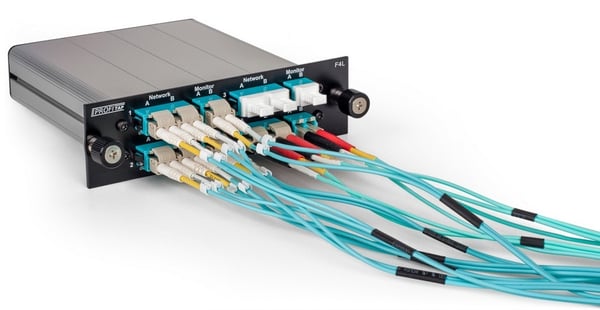
Because field work can introduce variables such as temperature cycling (which affects attenuation), unexpected changes in traffic load, or cable stress/bending during maintenance, issues can arise. To ensure these problems are caught before they impact the application, continuously monitor fiber links by deploying fiber TAPs, rather than using them only for temporary testing.
Fiber TAPs benefits
TAPs ensure you see reality, not assumptions. They offer:
- Complete and non-intrusive visibility: They provide a full, passive copy of optical traffic without affecting the live network link.
- Performance assurance: They do not introduce any latency or jitter into the production network, maintaining link integrity.
- Data integrity: All critical protocol information, including timing, VLAN, and MPLS data, is preserved.
Protocol transparency: They operate seamlessly with industrial protocols such as PROFINET, EtherNet/IP, and Modbus TCP.Ultimately, TAPs ensure that monitoring reflects the true network state, eliminating the need for assumptions.
Practical deployment
Here is a recommended deployment pattern:
- Design and calculate power budgets using optical specifications and safety margins.
- Inspect and clean fiber before commissioning.
- Measure link loss after installation to confirm calculated margins.
- Install passive fiber TAPs at key network boundaries:
- Aggregation points
- Links to remote IO racks
- Control room fiber trunks
This pattern closes the gap between planning and operations. It validates design assumptions and continuously proves link health.
Why this matters
While power budget calculations confirm fiber link quality during installation, maximum reliability requires a four-pillar approach: Calculation, Inspection, Measurement, and Continuous monitoring (via TAPs and data capture). This ensures sustained link performance beyond initial setup.
