
Packet captures provide a detailed record of what happened on a network. They are routinely used for troubleshooting, security monitoring, incident response, and forensic analysis. When an incident also has legal, regulatory, insurance, or law-enforcement implications, however, the technical usefulness of packet data is only one part of a much larger picture.
Whether captured network traffic can ultimately be used as evidence depends on factors extending well beyond the capture technology itself. These can include the legal basis for monitoring, the scope of capture, how data is handled after collection, documentation, retention procedures, and the rules applicable in the relevant jurisdiction.
Let's examine the technical role of packet capture in evidence-oriented investigations and explain how network TAPs and Profitap IOTA fit into that process.
Important: This article provides general technical information and is not legal advice. Requirements concerning interception, privacy, monitoring, evidence handling, disclosure, and admissibility vary between jurisdictions and circumstances. Organizations should establish appropriate procedures in collaboration with their legal, compliance, and forensic specialists.
Network TAPs and network “tapping”
The word "tapping" can cause some confusion. In legal contexts, terms such as wiretapping and interception can refer to activities governed by specific privacy, communications, and surveillance legislation.
In network engineering, a network TAP (Test Access Point) is a device that provides visibility into network traffic for purposes such as monitoring, troubleshooting, performance analysis, and cybersecurity.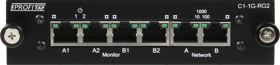
A TAP copies traffic from a network link and sends it to connected monitoring or analysis equipment.
The presence of a TAP does not, by itself, determine whether capturing or retaining the observed communications is legally permitted. Authorization, purpose, scope, organizational policies, privacy requirements, and applicable law remain the responsibility of the organization operating the monitoring environment.
Why packet data can be valuable during an investigation
Network metadata, logs, alerts, and packet captures provide different perspectives on an incident. Packet-level data can be particularly useful because it allows investigators to revisit recorded network activity and examine details that were not considered important at the time of capture.
Depending on how the capture system was configured, packet data may help analysts:
- reconstruct network conversations;
- examine protocol behavior;
- investigate suspicious connections;
- validate findings from other security systems;
- establish technical timelines;
- examine DNS, TCP, and application-level activity; and
- perform retrospective analysis after an incident has been discovered.
This makes packet capture potentially valuable to incident responders and forensic specialists.
It does not, however, automatically make a packet capture legal evidence or guarantee that a court, regulator, insurer, or other third party will accept it.
Collection and evidence handling are separate questions
For organizations considering packet data in an investigation with potential legal consequences, it is useful to distinguish between two separate issues.
1. Was the traffic captured appropriately?
Rules concerning network monitoring and interception vary considerably between countries and situations.
Relevant considerations may include authorization to monitor the network, employee or user privacy, the confidentiality of communications, the purpose and proportionality of monitoring, data protection requirements, and the scope of an investigation.
For this reason, there is no universal technical configuration that makes network traffic “lawfully captured.” The appropriate monitoring framework should be established by the organization together with its legal, privacy, compliance, and security stakeholders.
2. How was the resulting data handled?
If packet data later becomes relevant to an investigation, additional questions may arise to get a complete view of the situation.
For example:
- Where was the traffic captured?
- What equipment performed the capture?
- How was that equipment configured?
- Were capture filters applied?
- Was the complete frame captured, or was a snap length configured?
- What time source was used?
- When was the relevant data exported?
- What happened to the exported file afterward?
- Who subsequently handled or analyzed it?
The importance of the capture context
A packet capture is more useful when investigators understand how it was produced. Useful technical documentation can include the location of the observation point in the network, the monitored interfaces and link speed, the capture system used, and the capture configuration in effect at the relevant time.
Capture settings are particularly important. For example, investigators may need to know whether filters were active and whether complete Ethernet frames were captured or only the first portion of each frame. These details can affect what conclusions can reasonably be drawn from the resulting packet data.
Timestamping and time synchronization
Packets recorded by a capture system contain timestamps that help analysts reconstruct the sequence and timing of network events. The accuracy and usefulness of those timestamps depend on the capture environment and its time synchronization. For many environments, NTP provides an appropriate synchronization mechanism. More specialized synchronization methods may be relevant where multiple measurement systems must be correlated with particularly high timing accuracy.
For an investigation, it can therefore be useful to document the time source and any known clock differences affecting the capture system. This is especially important when packet data needs to be correlated with logs, alerts, endpoint activity, or captures produced by other systems.
PCAPNG as a format for packet analysis
PCAPNG is a widely used packet-capture format and is supported by tools such as Wireshark. Compared with classic PCAP, PCAPNG can accommodate richer information about a capture environment and supports modern timestamp representations. This makes it useful for detailed network analysis and for exchanging packet captures between technical teams and forensic tools.
The format itself, however, does not establish the authenticity, legal status, or chain of custody of the information it contains. Those questions depend on the broader collection and handling process.
Where Profitap TAPs fit
Profitap network TAPs provide an observation point from which monitoring systems can receive copies of network traffic. Because the monitoring output is provided out of band, analysis equipment does not need to participate in the production network's routing, switching, or session establishment simply to observe the traffic.
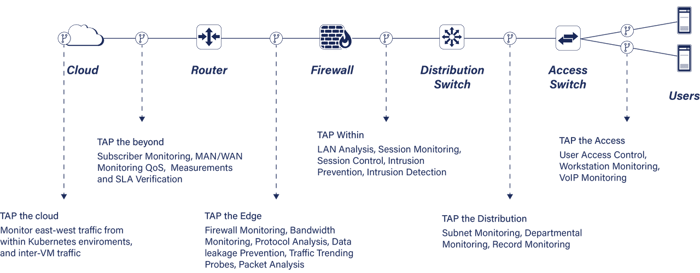
This can provide network and security teams with a consistent source of traffic for monitoring and packet capture. From an investigative perspective, the TAP's role should therefore be understood narrowly and accurately: it provides visibility into traffic at a defined point in the network.
What happens to that traffic after it leaves the TAP depends on the connected capture, monitoring, storage, and analysis systems.
Where Profitap IOTA fits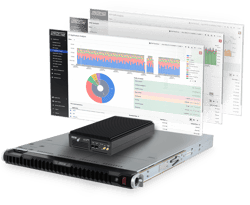
IOTA can capture network traffic for packet-level storage while also extracting metadata used for analysis and investigation. These processes operate in parallel: packet capture is used for packet storage, while a separate data stream is used for metadata analysis.
This distinction is important. The metadata should not be interpreted as an evidentiary copy derived from an immutable “original” capture. Rather, packet storage and metadata extraction are separate functions operating on the observed traffic.
IOTA can therefore help an analyst move between higher-level network observations and the underlying packet data when deeper investigation is required.
Depending on the configuration and available storage, retained packet data can also allow investigators to revisit earlier traffic and conduct retrospective analysis.
Relevant traffic can subsequently be exported as PCAPNG for further examination with external tools or as part of an organization's established investigation process.
What IOTA does not provide
It is equally important to define the boundary of the product's role.
IOTA does not by itself establish whether captured traffic was legally authorized, whether an exported packet capture is admissible as evidence, or whether an organization's complete evidence-handling process satisfies a particular legal or forensic standard.
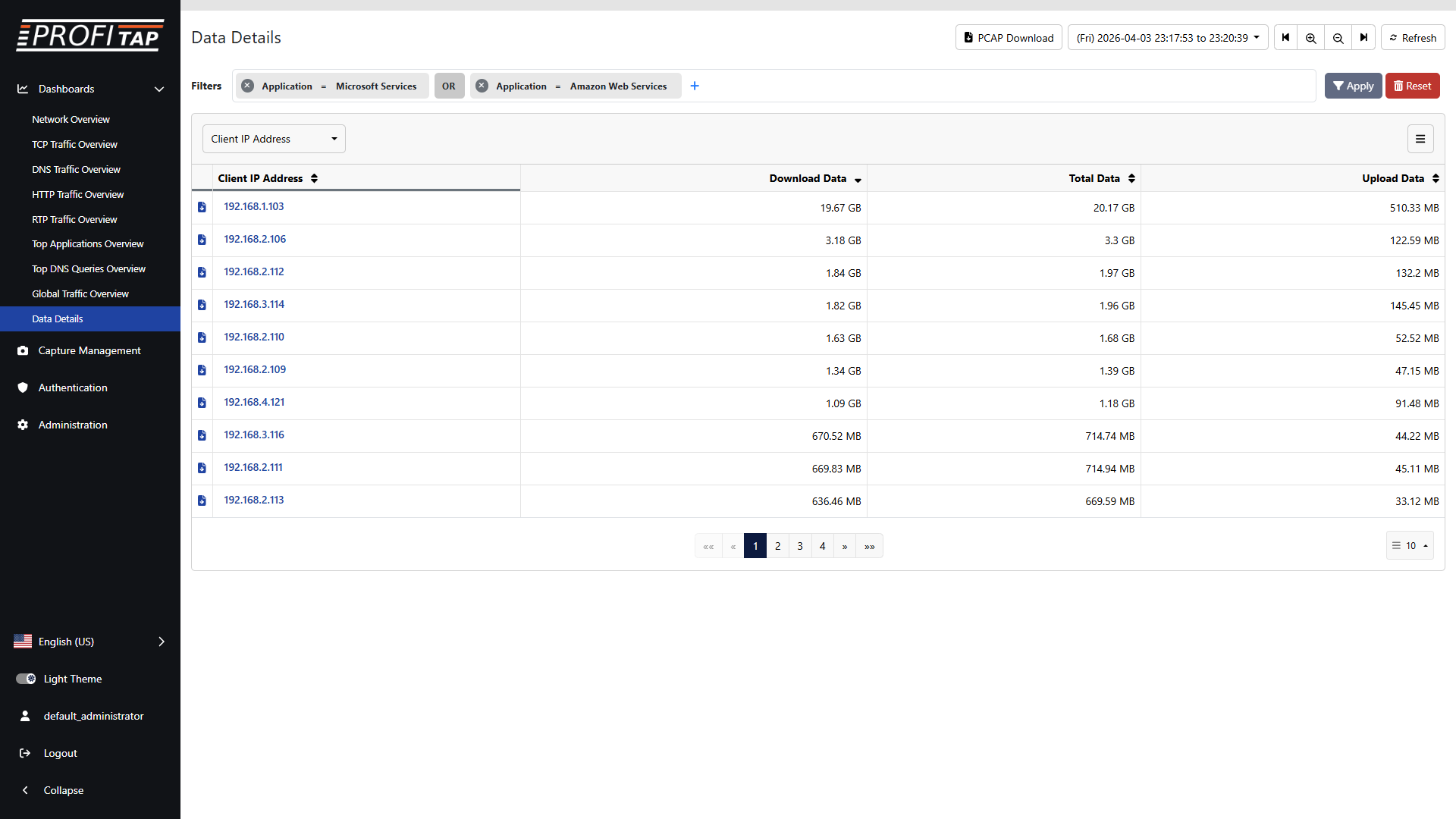
IOTA allows you to analyze TCP, DNS, RTP, microbursts, top talkers, and more than 3,000 applications and protocols, providing a comprehensive view of network traffic. Specific traffic can be captured and stored locally for later analysis or exported for detailed inspection in Wireshark. Profitap provides the capabilities for network visibility, capture, storage, analysis, and export, while the organization using these capabilities remains responsible for the surrounding governance, evidence-handling, and compliance processes.
Building an investigation process around packet capture
Organizations that expect packet data to play a role in serious incident investigations may benefit from defining procedures in advance. The exact process should be established with the appropriate legal, compliance, security, and forensic specialists. From a technical perspective, useful areas to document can include:
-
Capture environment
Record where traffic is observed and which interfaces, links, and monitoring systems are involved.
-
Capture configuration
Document relevant capture settings, including filters, interfaces, retention settings, and whether full frames or truncated frames are being recorded.
-
Time synchronization
Document the time source used by the capture system so that packet timestamps can be interpreted and correlated with those from other systems.
-
Data export
Define how relevant packet data is selected and exported when an investigation requires external analysis.
-
Post-export handling
If an investigation requires formal evidence-preservation procedures, establish how exported files will be stored, identified, transferred, hashed, accessed, and analyzed.
The last step is particularly important because it occurs outside the basic function of capturing network traffic. It should therefore be defined as an organizational or forensic procedure rather than attributed to the TAP or capture appliance.
Packet capture in regulatory and incident-response environments
Cybersecurity regulations such as the CRA and NIS2 increase the emphasis on effective risk management and incident response across affected organizations.
Packet capture can support those activities by giving technical teams detailed network information that can be examined during and after an incident. That does not mean NIS2 requires packet capture, nor does compliance with NIS2 determine whether packet data is admissible in legal proceedings.
The connection is more practical: when an organization needs to understand a significant network incident, having sufficient visibility and historical network information can make technical investigation considerably more effective.
Can packet data be used in court?
There is no universal yes-or-no answer.
Packet captures can form part of investigations and legal proceedings, but whether a particular capture can be relied upon as evidence depends on the circumstances in which it was collected and handled, the applicable legal framework, and the requirements of the relevant proceeding.
A network TAP or packet-capture appliance cannot make that determination. These technologies provide investigators with detailed network information from a known observation point and, when packet data has been retained, allow that traffic to be examined retrospectively.
For organizations that may need packet data for legal, regulatory, insurance, or forensic purposes, the safest approach is therefore to treat technology and procedure as separate but complementary components:
Profitap provides the visibility and packet data. The organization defines how that data is authorized, preserved, handled, and ultimately used.
That boundary keeps the role of packet capture technically precise while allowing legal and forensic specialists to determine the requirements appropriate to each investigation.
